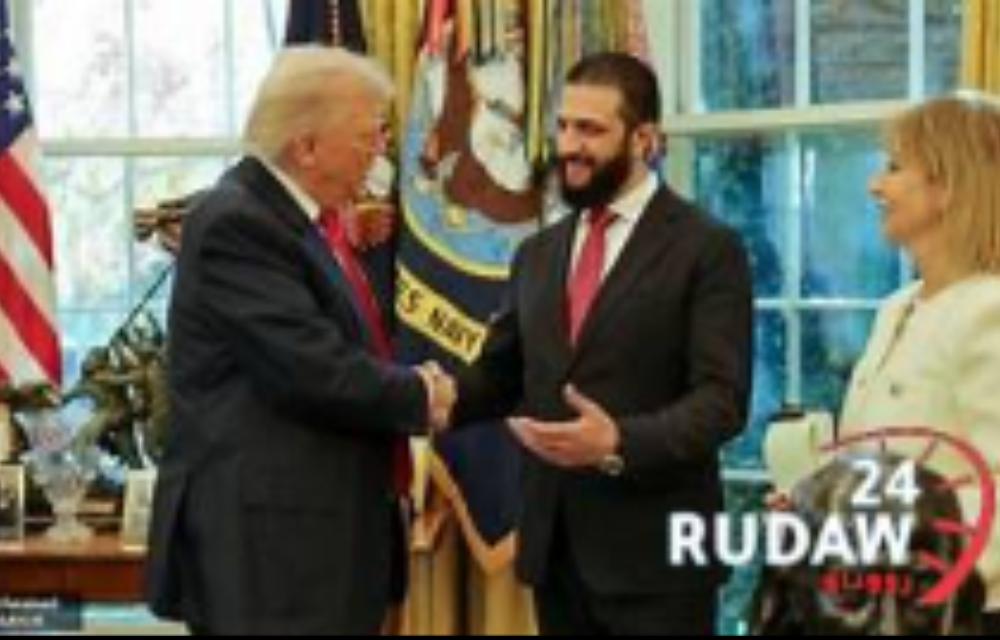
In the wake of Bashar al-Assad's dramatic ouster in late 2024, Syria's transitional landscape has been dominated by Ahmad al-Sharaa, the leader of Hayat Tahrir al-Sham (HTS). Once known as Abu Mohammad al-Jolani, al-Sharaa carried a $10 million U.S. bounty on his head for his ties to al-Qaeda and jihadist activities. However, following diplomatic engagements in Damascus, the U.S. scrapped this reward in December 2024, citing al-Sharaa's commitments to combat terrorism and foster an inclusive government. By mid-2025, the U.S. had revoked HTS's terrorist designation, paving the way for al-Sharaa's international rehabilitation, including a historic visit to the White House in November 2025. Even the United Nations Security Council lifted terror-related sanctions on al-Sharaa and his key allies in November 2025, signaling a global shift toward normalizing his rule.
Yet, this rapid forgiveness—extended by the very nations that once branded him a global threat—raises profound alarms. Critics argue that overlooking al-Sharaa's jihadist roots could transform Syria into a magnet for terrorist organizations, exacerbating the already dire plight of millions of displaced Syrians. If unchecked, this "terrorist" whose arrest bounty was pardoned by those who set it could entrench Syria as a hub for every major extremist network, from ISIS remnants to al-Qaeda offshoots, threatening regional and global stability.
Ahmad al-Sharaa's ascent is a tale of reinvention. Formerly aligned with al-Qaeda in Iraq and later leading the al-Nusra Front (an al-Qaeda affiliate in Syria), he fought U.S. forces and was imprisoned in an American-run facility. He broke ties with al-Qaeda in 2016 to form HTS, focusing on Syrian governance rather than international attacks, but his group's record in Idlib included persecuting minorities, enforcing strict sharia, and clashing with U.S. troops as recently as 2022. Despite recent moderation—such as protecting some minorities and appointing women to roles—analysts warn this may be tactical, akin to the Taliban's pre-2021 diplomacy.
The bounty removal came after U.S. diplomats, including Barbara Leaf, met al-Sharaa in Damascus and received assurances that terrorist groups would not threaten Syria or beyond. Leaf described the talks as "pragmatic," emphasizing deeds over words. Similar engagements led to the UK's delisting in October 2025 and the UN's action. Proponents view this as a pragmatic step toward stabilizing Syria, with al-Sharaa promising a new constitution, elections in up to four years, and integration of groups like the Kurdish SDF into national forces.
However, skeptics highlight the irony: the same powers that offered the reward are now absolving him, potentially at great cost. As one analyst noted, "Al-Sharaa is not moderating, but mutating radicalism... Neo-jihadism is political Islam's deadliest reinvention yet." His past praises of terrorism, like Hamas's attacks on Israel, and HTS's authoritarian rule in Idlib fuel doubts.
Syria's upheaval has displaced over 13 million people, with millions more internally uprooted, living in dire conditions amid poverty, unemployment, and crumbling services. In post-Assad Syria, sectarian violence—despite al-Sharaa's downplaying it as "less than expected"—has intensified in coastal and Christian areas, targeting Alawites and other minorities. Revenge killings, looting, and chaos by armed factions exploit HTS's weak control, worsening the refugee situation.
If Syria devolves into a terrorist sanctuary, the displaced could face even greater peril. A generation raised under jihadist rule in places like Idlib—indoctrinated in extremism—risks radicalization.
Tens of thousands of former ISIS and al-Qaeda fighters have integrated into Syria's institutions as soldiers, judges, and educators, potentially turning the country into a "jihad catalyst." Israeli intelligence warns of ISIS resurgence amid governance vacuums, with risks spilling into neighboring regions like the Golan Heights. Iran and its proxies could exploit this instability, further displacing populations.
The refugee crisis is already severe: coordinated attacks in early 2025 caused civilian casualties, particularly among Alawites, while economic revival lags outside coastal areas. Without vigilance, al-Sharaa's rule could perpetuate displacement, turning camps into recruitment grounds for extremists.
Concerns abound that Syria under al-Sharaa could become a nexus for terrorism. His failure to crack down on jihadists—evident in ongoing violence in Daraa and the coast—threatens national unity. Rival factions, including ex-ISIS networks, view him as a "sellout" for Western engagements, raising assassination risks and potential AQ-ISIS conflicts. As one observer warned, "hundreds of thousands of fighters who belonged to ISIS and al-Qaeda... have now become the official army... The result will be the rapid transformation of the country into a hub for terrorism."
International normalization—despite al-Sharaa's al-Qaeda roots—echoes past mistakes with groups like Hamas or the Taliban. Ties to Turkey, which facilitated ISIS in the past, and pressures to confront Kurds (protected by the West) add volatility. Qatar's funding of extremists further complicates matters. If al-Sharaa prioritizes ideology over democracy, Syria could explode into sectarian wars, attracting global jihadists.
Israeli officials doubt al-Sharaa will eradicate ISIS, predicting he will merely "manage" threats amid weak control. European and U.S. support, while aimed at reconstruction, risks legitimizing a regime with terrorist ties, potentially turning Syria into a launchpad for attacks.
The forgiveness of al-Sharaa's bounty by his former pursuers is a gamble. While some see promise in his pragmatism and anti-ISIS pledges, substantiated concerns from experts and on-the-ground reports suggest otherwise. For Syria's displaced millions, already enduring "huge divisions" and chaos, this could mean prolonged suffering. If we are not careful, the very architects of his rehabilitation may unwittingly enable Syria's transformation into the center of every terrorist organization and branch worldwide. The world must judge by deeds, not diplomacy, to avert this catastrophe.